
Bleaching systems
La eliminación de pigmentos y otras impurezas de las grasas y aceites crudos garantiza la apariencia, calidad y estabilidad de sus productos de aceite refinado. Ponga a trabajar sistemas personalizados de blanqueo húmedo, seco o de dos fases en su planta de refinado de aceite alimentario. Debido a la continua investigación y desarrollo, la fiabilidad es el sello distintivo de los sistemas de blanqueo Alfa Laval. Logre una alta productividad y un bajo coste gracias a una tecnología avanzada.
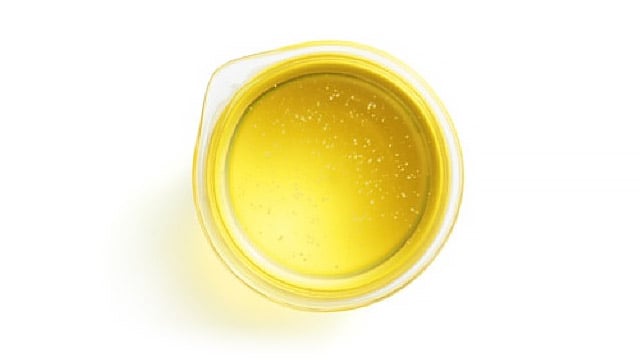
Mejore la calidad, la estabilidad y la apariencia de sus aceites alimentarios con un tratamiento adsorbente inteligente
- Amplia gama de sistemas de blanqueo robustos y fiables para sus procesos de aceite alimentario
- Alta calidad de aceite gracias a sistemas completos de blanqueo con componentes básicos de Alfa Laval
- Máximo rendimiento de aceite y consumo mínimo de servicios públicos
- Fácil de operar y mantener con dosificación y control automatizados
Los retos que supone la eliminación de contaminantes tóxicos nos han mostrado las claras ventajas de hablar con expertos que están realmente en nuestra sintonía.” - Niels Jørgen Eriksen, Production Manager of Fiskernes Fiskeindustri.
No sólo nos han suministrado un equipo muy eficiente, sino que también nos han hecho sugerencias sobre cómo podemos sacarle el máximo partido.” - Andrey Nepochatov, Head of the Prikolotnoye Oil Extraction Plant.
Applications
- Seed oil processing
- Fruit oil or palm oil processing
- Used cooking oil and other technical-grade oils for hydrogenated vegetable oil (HVO) pretreatment
- Animal oils and fats
Cómo funciona
How bleaching improves edible oil quality
Bleaching of edible oil is a critical refining step that removes pigments and impurities affecting oil safety, product stability, and downstream equipment performance. During the process, tailored bleaching agents bind to contaminants, which are then removed through filtration. Using efficient bleaching equipment eliminates:
- carotenoids and chlorophyll
- oxidation products through decomposition and partial removal
- contaminants such as soaps and trace metals
- traces of phosphatides
- polycyclic aromatic hydrocarbons
- other pollutants
The result: a commercially viable product with superior clarity, longer shelf life, and more consistent refining performance. Proper bleaching also prevents negative effects on subsequent processes, such as fouling in downstream equipment.
Understanding the bleaching process in edible oil refining
The bleaching process in oil refining begins by mixing oil with a bleaching agent, such as clay, and then filtering out the impurities. Once saturated, filters containing spent clay or other bleaching agents are periodically regenerated, while fresh filters replace them. In some cases, spent clay can be reused for prefiltration to reduce material costs, although this is only feasible when bleaching dry oils.
Advantages of two-stage bleaching in edible oil processing
Two-stage bleaching removes impurities more thoroughly than single-stage bleaching. By applying different agents under controlled temperature and moisture conditions, this method optimizes the bleaching process in edible oil refining, enabling the more efficient extraction of components such as chlorophyll.
For larger-scale operations, such as producing palm oil or rapeseed, hybrid two-stage bleaching systems combined with single-step filtration provide a good balance between high quality with cost efficiency, delivering significant clay savings. Common agents include:
- Natural bleaching earths: Suitable for animal fats, though with limited colour-reduction capability
- Acid-activated bleaching earths: Versatile and widely used to remove most impurities
- Activated carbon: Effective in removing polyaromatic hydrocarbons and specific pollutants
- Synthetic amorphous silica: Used mainly in wet bleaching to selectively remove phosphatides, trace metals, and soaps
Customer's voice
Fiskernes Fiskeindustri A.m.b.a.
When Fiskernes Fiskeindustri needed to remove toxic pollutants from its fish oil products, they turned to Alfa Laval. After extensive testing, Production Manager Niels Jørgen Eriksen awarded Alfa Laval the contract to deliver and install the right process equipment.
The result: Safe, high-quality fish oil and peace of mind.
The Alfa Laval project has met our needs, and we are definitely satisfied with the results to date. The challenges involved in removing toxic pollutants have shown us the clear benefits of talking to experts who are really on our wavelength.”
- Niels Jørgen Eriksen, Production Manager
Prikolotnoye Oil Extraction plant
The Prikolotnoye plant partnered with Alfa Laval for a full refinery upgrade, including a dry bleaching plant with a multi-dosing system. Thanks to the system’s flexible design, Alfa Laval integrated the company’s own ideas for mixing and dosing.
The result: A customized, efficient process that works flawlessly.
Alfa Laval really listened to what we wanted. They not only supplied us with highly efficient equipment,but also made suggestions about how we could get the most out of it. And they made sure that our ideas about special mixing and dosing were also incorporated. The system now all works perfectly.”
- Andrey Nepochatov, Head of Oil Extraction Plant
Boost edible oil quality and yield: Demand more from your bleaching process
Rely on Alfa Laval's bleaching process systems for optimal refining of palm, palm kernel, soybean, rapeseed, sunflower, coconut, and other edible oils. With deep expertise and a wide portfolio of proven components and equipment, we make it simple to engineer the right solution for your process. From feed and dosing systems to bleaching reactors and filtration, Alfa Laval's bleaching systems deliver the flexibility and customization you need to succeed. Backed by continuous research and development, our oil bleaching process solutions range from straightforward manual units to local control units or fully automated plants – ensuring the most advanced technology is working for you.
Download our flexible bleaching solutions brochure or contact us for more information about Alfa Laval bleaching systems.
Principales equipos de procesamiento de aceite comestible utilizados en nuestros sistemas

Webinar para la industria del aceite alimentario
Nuestros expertos comparten conocimientos para optimizar los procesos de refinado de aceites alimentarios, eliminar impurezas y componentes volátiles, con vistas a una mejor calidad, seguridad y rendimiento del producto.