
Limpieza de taladrina
¿Por qué limpiar el refrigerante? Menos tiempo de inactividad, mayor eficiencia, menores costes operativos y más tiempo libre son solo algunas de las razones de peso para cambiar a un módulo de limpieza de líquidos específico. Al elegir la separación por pila de discos en lugar de filtros/skimmers o similares, su operación funcionará con mayor fluidez, con un coste menor y un impacto mínimo en el medio ambiente.
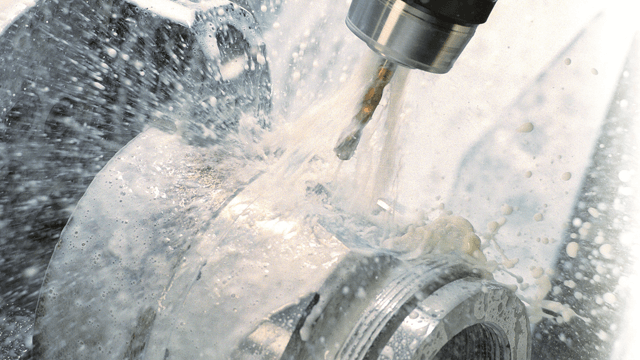
Satisfacemos las necesidades de la industria de limpieza de refrigerantes con soluciones de vanguardia.
- Prolonga la vida útil de las herramientas y los fluidos.
- Aumenta el tiempo de actividad y la productividad.
- Componentes más limpios, mejor calidad del producto final.
- Entorno laboral más saludable
- Reducción de residuos y costes de sustitución/eliminación.
El separador centrífugo es una tecnología probada y sostenible para tratar fluidos industriales contaminados mediante la eliminación de aceite residual, virutas metálicas finas, suciedad y lodos. La separación en tres fases trata eficazmente todas las partículas finas de hasta un micrón y elimina prácticamente todo el aceite contaminante, al tiempo que conserva los aditivos en un funcionamiento continuo. Este proceso contribuye a un entorno de trabajo más saludable al reducir el crecimiento bacteriano, que también es perjudicial para el fluido.
Otras ventajas son la reducción del desgaste de las herramientas, la disminución de los rechazos y una mejora general de la calidad. Explore la gama de separadores de Alfa Laval para la limpieza de fluidos industriales y descubra cómo puede maximizar la productividad, mejorar la eficiencia y minimizar el impacto medioambiental.
Save resources by efficient cleaning of your industrial fluids
With a cleaning module from Alfa Laval you will extend the service life of coolants. This means that the consumption of concentrate/detergents is lower, and disposal costs are reduced.
Whether you are running a manufacturing operation or building custom coolant filtration and degreasing systems, centrifugal separation is the smarter choice. You and your customers can achieve substantial savings compared to traditional methods like filters. For smaller or local tanks, Alfa Laval offers a portable cleaning unit. If you run a centralized system, we suggest a permanent solution. Either way we work closely together with you to make sure we offer the very best solution for your system.
Many problems can be avoided by using dedicated coolant cleaning products from Alfa Laval. Replacing dirty coolants with traditional methods is messy and time consuming. With a centrifugal separator, the cleaning process is less complicated. It also offers a solution to stricter environmental legislation as well as follow-on costs in terms of wear on expensive tools and equipment.
When investing in disk stack separation, you automatically invest in a profitable solution, prolonging your coolants’ service life by up to 10 years. At the same time, you get lower purchasing and disposal costs, fewer rejects, less manual work for tank cleaning and more production uptime.
Depending on your needs for the cleaning of coolants, Alfa Laval offers a fixed or a mobile solution for individual tanks with the Alfie 200 or the Alfie 500. For larger or centralized systems the AlfaPure is the way to go. It is a complete separation movable module with larger capacity.
Whatever your choice, the installation is simple and no modification to your existing system is necessary. And since the centrifugal separator is installed in a bypass flow, cleaning can proceed both during production and when your equipment is idle.
Alfie
Quick, continuous cleaning
AlfaPure
Efficient centrifugal separators for cleaning industrial service fluids
-
Removes water, abrasive metal fines and other particles as small as 2 μm
-
Plug-and-play module for easy installation
-
No plant redesign required
-
Disc stack technology speeds up the separation process
Use our CoolCalc to see how cost effective using an Alfie can be.
-
Can be linked to a bypass flow, ensuring less downtime for service
-
Disc stack separators provide simultaneous, three-phase separation of oil and sludge
-
Designed for operator convenience
-
No machinery redesign required
Explore the full Coolant cleaning product range
Browse our product catalogue to select the right product for your application. You’ll be able to view technical specifications, compare options, find a local partner, and then request a quote - all in one place.
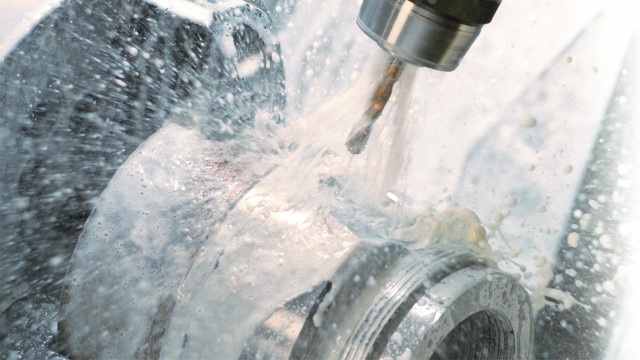
Cleaning technologies for industrial fluids
If you clean your industrial fluids you can make substantial cost savings. But how do you determine which technology is the most efficient and represents the least overall cost for your particular application? Here we look at the four most common options – centrifugation, filtration, skimming and coalescence – to help you decide.
The four technologies in brief
- Centrifugation separates matter of different densities – both oil and particles
- Filters use different mesh sizes to capture solids only
- Skimmers use an oleophilic collecting device like a belt or a disc to collect oil
- Coalescers remove oil from industrial fluids
The best technology is the one that suits your application
- Centrifuges return cleaned industrial fluids directly into the process, while contaminants are continuously separated and discharged. Particles are either collected in the separator bowl for later removal or expelled automatically.
- Filters commonly capture solids in a disposable cartridge, which needs replacing regularly.
- Skimming involves oil clinging to the outer surface of a floating, closed-loop tube, which moves across the water’s surface and adapts to fluctuating water levels.
- Coalescers require the industrial fluid to be nearly free of particles to function effectively. They are often paired with filters to create a combined system for removing both solid particles and water.
Cleaning technologies compared
Case stories
The Final Piece of Atlas Copco’s Coolant Cleaning Puzzle
Atlas Copco is a global manufacturer of industrial tools and equipment. They have a 150-year history of perfecting cutting-edge machinery for industries all over the world. And their dedication to improving industrial processes extends to their own factories as well. Such was the case in Atlas Copco’s factory in Tierp, where they turned to Alfa Laval to improve their coolant cleaning system.