
Calefacción geotérmica
La energía geotérmica puede adoptar distintas formas: profunda o superficial, de alta o baja temperatura y utilizarse para generar electricidad o calor, pero siempre tiene en común que está disponible 24 horas al día, 7 días a la semana. Al proceder de la corteza terrestre, es una fuente renovable que no depende del clima ni de la estación del año. Además de para calefacción, un sistema de almacenamiento en acuíferos también puede servir para refrigerar gratuitamente un edificio.
Elija al socio adecuado en energía geotérmica
- En Alfa Laval, vemos el gran potencial de la energía geotérmica como un importante recurso de calefacción sostenible para el futuro.
- Nuestro objetivo es suministrar soluciones energéticamente eficientes y fiables para un mayor rendimiento con el menor coste para el medio ambiente.
- Con 100 años de experiencia en transferencia de calor y centros de servicio en todo el mundo, tenemos experiencia y presencia en todos los mercados.
- Sabemos qué intercambiador de calor optimizará mejor su producción con el menor tiempo de amortización posible.
- Con la certificación de rendimiento de terceros AHRI, puede estar tranquilo, el rendimiento térmico de nuestros productos es tan bueno como decimos.
Tendencias en el sector de la calefacción geotérmica
El interés por la energía geotérmica como alternativa a los combustibles fósiles tradicionales va en aumento en el sector de la calefacción. Sobre todo cuando puede sustituir a los combustibles en las redes de calefacción urbana y llegar a un gran número de clientes a partir de un único conjunto de pozos. También hay cada vez más experiencia en el uso de la geotermia poco profunda con menor temperatura disponible y sistemas de almacenamiento térmico de acuíferos junto con bombas de calor para formar una opción asequible y energéticamente eficiente en el mercado de las energías renovables.
Sin embargo, esta industria no está exenta de desafíos. Dado que el agua puede contener altos niveles de cloruro y otras impurezas, pueden acumularse incrustaciones que reduzcan el rendimiento de los equipos de proceso. Aquí es donde entramos nosotros. Los equipos de alta calidad de Alfa Laval y su experiencia en el campo del servicio están probados para mantener sus procesos a una capacidad óptima con un tiempo de inactividad mínimo.
When it comes to equipment, we simply have to pick the best. The supplier must be able to prove a powerful capacity for after sales services and emergency preparedness. We are happy to say, that Alfa Laval fulfils these uncompromising criteria with a very safe margin.
Ali Ichedef, General Manager of Izmir Jeotermal
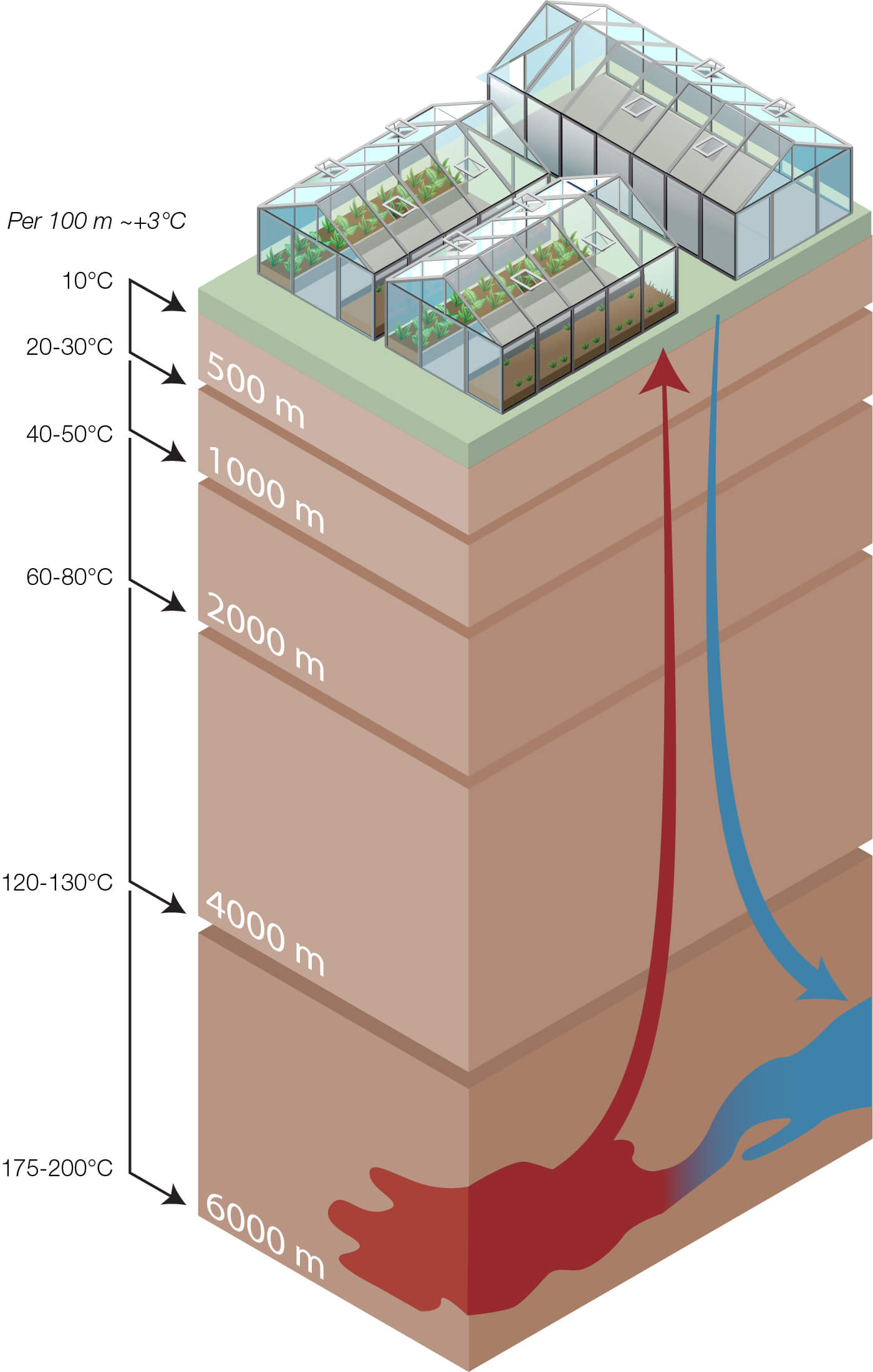
The Netherlands is the world’s second-largest food exporter by value, and the country’s 9000 hectares of greenhouses are a big reason why. But keeping those greenhouses at the right temperature requires lots of energy, so developing alternative energy sources is a top priority in the country’s efforts to meet its ambitious climate targets.
In many cases, geothermal plants that pump water from depths of at least 500 meters are the answer. Once drawn and used, this water can then be returned to the earth in an injection well.
Find out more about the important role of the heat exchanger in this revolutionary process.
Difference between shallow, aquifer and deep geothermal
Every well is unique with depths changing depending on location and conditions. When this industry talks about shallow or deep wells it is really to identify the main characteristics of a project. Shallow geothermal heat is generated from subsurface water using either an open loop where water is pumped from the well or a closed loop system with brine in a collector loop which is pumped up and down in the well.
Shallow wells and aquifers (≤500m)
Shallow geothermal heating using ATES (aquifer thermal energy storage) typically operates at depths of up to 100 meters where a heat pump is needed to achieve the right temperatures for heating purposes.
For cooling, shallow wells are an excellent source for free cooling, as water can be used at an ambient temperature to cool buildings during hot weather.
Shallow geothermal systems are most popular in residential and small commercial buildings, as they can be installed in a relatively small space and require less drilling and excavation than deep geothermal systems.
Deep wells (2000 - 5000m)
Deep geothermal heating typically operates at depths ranging from about five hundred meters to several kilometers below the surface where hot water or steam are used to generate via a heat exchanger.
The temperature of deep geothermal wells is often high enough to be used directly as it is, but at some locations and depths, there is still a need for heat pumps.
The most common depths for deep geothermal systems used for delivering heating to buildings and greenhouses are between 1,500 and 3,000 meters. It is often then connected directly to district heating systems.
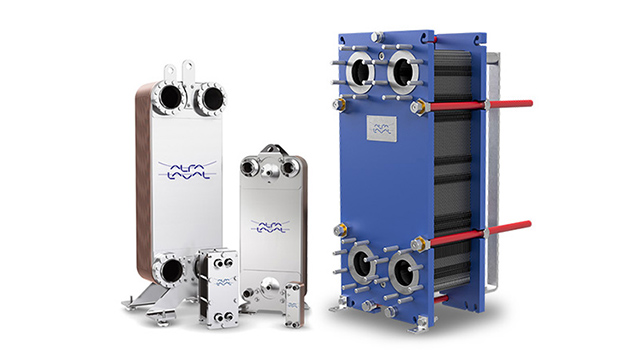
Gasketed plate-and-frame heat exchangers
- Flexible solutions that can be adapted to the duty ensuring highest thermal efficiency
- Compact designs save space and are easy to service and maintain
- Solutions to reduce fouling, stress and corrosion for maximum uptime
Semi-welded plate heat exchangers
- Highly efficient, reliable technology for applications that can cause pressure or temperature fatigue
- Guaranteed long sealing lifetime thanks to unique Alfa Laval RefTight™ sealing system
- A dependable solution for preventing cross-contamination between media
Brazed plate heat exchangers
- Lightweight copper-brazed construction with compact footprint
- Greater thermal efficiency than comparable shell-and-tubes
- Flexible options to fit a variety of applications with all different types of media/fluids
- Ideal for natural and low-GWP refrigerants
Fusion bonded AlfaNova heat exchangers
- True 100% stainless steel construction
- Strong corrosion resistance with aggressive media
- Prevents metal contamination in drinking water and other hygienic applications
- High thermal efficiency and compact footprint
AHRI-performance-certified heat exchangers for confident thermal performance
Certification from the Air-Conditioning, Heating, and Refrigeration Institute (AHRI) is the only global third-party verification of thermal performance, giving you independent assurance that your plate heat exchanger will perform in accordance with the manufacturer’s published ratings. Alfa Laval offers AHRI-certified gasketed plate heat exchangers, brazed plate heat exchangers, and fusion-bonded plate heat exchangers.
Consultant? System integrator?
Are you a consultant? Look here! With expertise from decades of experience in heat exchange, Alfa Laval offers knowledgeable resources for today’s heating and cooling challenges. Discover answers to complex questions on everything from energy efficiency to natural refrigerants, along with helpful tools that make it simpler to find the right technology for your application.
Efficiency that lasts for decades
The condition of your heat exchanger affects safety, product quality, and energy costs. Failures lead to downtime and production losses. But, with regular and proactive maintenance, performance is preserved and operations are kept trouble-free and predictable.
We have the expertise to help you, whether you experience a problem today, wish to prevent future issues, or want to solve the problem yourself with our online troubleshooter.
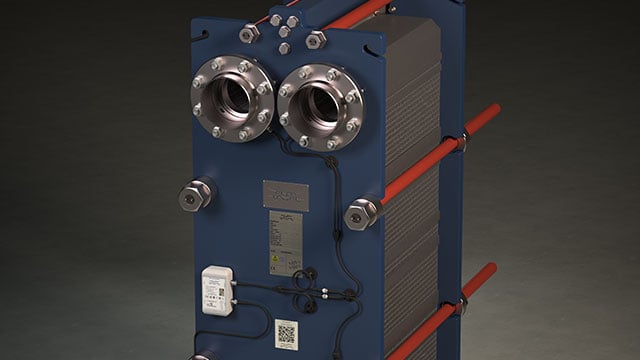
Digitalization for energy efficiency
Smart cities and digital intelligence could help cities to make progress toward meeting 70 percent of their Sustainable Development Goals. Digital services can already have a significant impact on heating and cooling systems in cities, making them more sustainable.
Enabling remote monitoring and performing dedicated analytics allow more precise and efficient operation, more informed decision-making, and targeted interventions. The development of more sophisticated and efficient heating and cooling systems is only possible through this digital transformation, which can provide reliable and affordable heating and cooling services to urban areas while reducing greenhouse gas emissions.
HVAC and the Sustainable cities
Consuming more than two-thirds of the world’s energy, our cities play a crucial role in tackling the climate crisis. A considerable part of cities’ energy consumption is for heating and cooling, which means improving energy efficiency is paramount. Alfa Laval has almost a century of experience in heat transfer and recovery and aims to become carbon neutral by 2030. Let us be your partner in the transformation to a sustainable tomorrow.